Beyond the Nursing Badge
After 30 years in nursing, a heartfelt reflection on identity, self-care, and rediscovering joy beyond the badge reminds caregivers that their worth extends far beyond the work they do.
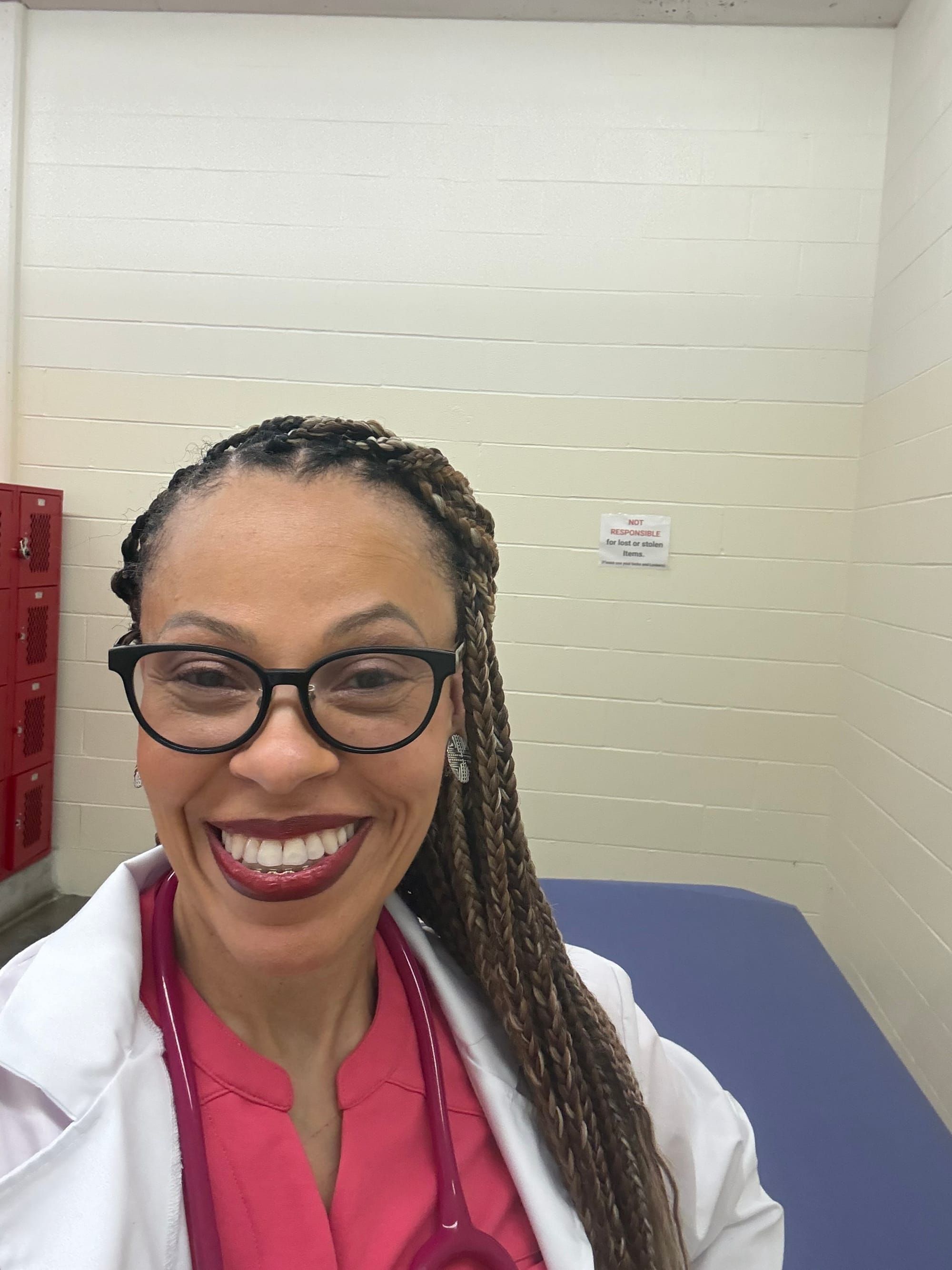
Who Are You Outside of Being a Nurse?
A profession is something you do. It was never meant to be the whole of who you are.
By Rachel Y. Hill, DNP, FNP-BC, PMHNP-BC, AHN-BC, HWNC-BC
I have been a nurse for more than thirty years.
I won't work clinically forever, and lately that thought has been sitting with me, asking a question I didn't expect to be so hard to answer:
What will I do outside of nursing?
Then comes the question underneath it, the one that really stops me.
After all this time, do I know who I am without it?
Very Intertwined
Let me lay out my life so you can see what I mean.
I have an aromatherapy business.
I work in a clinical mental health practice.
I work in family medicine here and there.
And I have a continuing education business for nursing professional development.
Read that list again.
Every single thing on it is connected to nursing.
Even the businesses I built outside the hospital walls are built from the same material.
If I'm honest, I would say I am very intertwined with the profession.
I have existed in a culture that has revolved around nursing for so long that I have to ask myself a real question:
Do I really know anything else?
When something is the water you swim in, it is hard to describe what dry land feels like.
What Stays With You
Nobody warns you about what a long career leaves in your body.
I still hear alarms in my head from machines and pumps from years ago.
A sound that no longer exists in any room I'm standing in will still pull my attention.
I still have flashes of experiences, faces and moments and rooms I haven't been in for decades, arriving without being invited.
After thirty years, how could I not?
That is a long time to be on alert for other people's worst days.
Our nervous systems are not built to carry that and stay quiet about it.
I'm not telling you this to scare anyone.
I'm telling you because I think many of us carry the same things and don't say so out loud.
We tell ourselves it's just part of the job.
Maybe it is.
But it deserves to be named, and it deserves our care, not our silence.
The Fun Came Later
Here is the part that is both a little funny and a little sad.
The hobbies came much later. The fun came much later.
The salsa dancing came later.
The football games came later.
Really enjoying my family, being fully present with them and not half-listening with my mind still on the unit, came later.
For a long stretch of my life, there wasn't room for any of it.
There was work, and there was recovering from work, and then there was work again.
I don't regret the years I gave to my patients.
But I do wonder who I might have been, and what I might have enjoyed, if I had learned sooner that a life is allowed to have more than one room in it.
What I can say is that I'm glad I found them.
Every time I'm on a dance floor or in the stands with people I love, I think:
This is also who I am.
It is a good feeling to meet a part of yourself that the job never asked for.
Why It Is So Tricky
I want to be fair here, because telling nurses to "have a life outside of work" without acknowledging what we're up against would be unkind.
I can see why this is so hard.
Overtime shifts.
Mandatory overtime.
Short staffing that creates opportunity after opportunity to say yes, because the need is real and the people on the other end of it are real.
Caseloads, day in and day out.
There is always one more patient, one more shift, one more favor, one more call.
And the nature of the work doesn't help.
You never really get away from the job unless you leave it.
The patients don't stop needing us when the shift ends.
The guilt of walking out the door when the unit is short can feel heavier than the exhaustion itself.
So when I say nursing shouldn't be your whole life, I'm not saying it is simply a matter of willpower or better time management.
The system makes it hard, and the system needs to change.
Safe staffing, reasonable schedules, and real limits on mandatory overtime are not luxuries.
They are the conditions that make a full life possible.
But while we keep asking for that change, we can protect what we are allowed to protect, which is our sense of who we are.
Who Said I Couldn't?
Here is something I've had to ask myself honestly.
Nobody ever told me I couldn't enjoy my life outside of nursing.
No one sat me down and said so.
But the pressure of the job made it feel implied: the overtime, the short staffing, the unspoken rule that a good nurse always says yes.
And then I wondered:
Did I make that implication myself?
Was it the job, or was it my own history of people-pleasing and not setting strong, healthy boundaries?
I think the honest answer is both.
The job sent the message, and my old patterns were ready to receive it.
I don't say that to blame myself or anyone else.
I say it because it matters.
If the pressure came from outside, we can ask for better staffing and fair schedules.
If part of it came from within, we can practice the boundary, one small no at a time.
Either way, I'm giving myself permission now, and I'd like to give it to you, too.
To the Younger Nurses
This is the part I most want to say, and it comes from a place of love.
To the younger generations coming up behind me:
Let nursing be a profession, and don't let it be your life.
Be proud of it.
It is meaningful, important work, and you should be proud.
Give it your skill and your heart on the days you're there.
But let it be the thing you do, not the whole of who you are.
Keep your friends who aren't nurses.
Keep the hobby you had before nursing school, or find one.
Keep your family close.
Go to the concert, the game, the dance class, the trip.
Take the day that belongs to you.
If you don't, one day you may find yourself in the middle of your career wondering who you are when the badge comes off, and that is a lonely question to ask at fifty or sixty.
You are going to be a better nurse for having a life.
The patient in front of you will feel the difference between a person who is running on empty and a person who is whole.
We Are More Than Just a Nurse
When someone asks "what do you do?" most of us have one answer.
I'm a nurse.
And it is true.
But it is not the whole truth.
I'm also a mother and a grandmother.
I'm a woman who learned to salsa and who has strong opinions at football games.
I'm someone who loves the smell of a good essential oil and the feeling of a quiet room.
I'm a person who is still discovering what she likes, which is a wonderful thing to be at this stage of life.
If you strip away the title, the scrubs, the license, and the schedule, I want to still be someone worth knowing.
I think that's true for all of us.
You are not only what you do for other people.
You are also what you love, what delights you, and what you are curious about.
Beyond the Badge
Retirement is not some far-off idea for me anymore.
It is a few years away, and I find myself wondering what it will feel like.
Will it feel like relief? Freedom? Grief?
I suspect it may be all three, sometimes in the same afternoon.
When your days have been shaped by a schedule, a team, and a purpose for decades, the quiet that comes after is not a small thing.
There will be a morning when no one needs me at a certain time, and I'll have to decide who I am in that hour.
I know I'm not the first to stand at this edge.
I have known nurses who left, for all sorts of reasons: retirement, health, burnout, family, a change of heart, a workplace that finally asked too much.
For many of them, walking away was hard.
Even the ones who knew it was the right decision felt the loss.
When the badge has been clipped to you for that long, taking it off can feel like taking off a piece of yourself.
That tells me something important.
It is not a sign that we're weak or unprepared.
It means the work mattered to us, and that we gave it our hearts.
Grief at leaving something you loved is just love, looking backward.
So how do you exist beyond the badge?
I don't have a tidy answer.
But I believe it starts well before the last shift.
It starts with the dance class, the football game, the friend who isn't a coworker, the hobby we keep for no reason other than joy.
Every one of those is practice for the day the badge comes off.
They are how we build a self that will still be standing when the title is gone.
And I think it also means being gentle with ourselves when that day comes.
Give it time.
Let it feel strange.
Let yourself miss it.
Then let yourself discover what's next, one curious morning at a time.
So, What Will I Do?
Honestly, I don't have the whole answer yet, and I think that's okay.
I'm still in the middle of this question, and I would rather be honest about that than pretend I have it neatly figured out.
What I do know is this.
I'm going to keep saying yes to the things that came late.
More dancing.
More football.
More time with the people who are my family.
And I'm going to keep getting curious about the parts of me that nursing never had time to meet.
Maybe I'll always carry a little of the profession with me.
The alarms may never fully go quiet, and I think I'm making peace with that.
But I want my identity to be bigger than any one role, so that when the day comes that I set the work down, I'm not setting down myself.
What I'd Offer You
If you've been in this a long time, or you're just starting, here is what I would gently put in your hands:
- Name the parts of you that aren't a nurse. Write the list. If it is short, that is information, not a failure.
- Protect one thing that is only yours. A class, a team, a garden, a standing date with a friend. Treat it like a patient appointment that doesn't get bumped.
- Notice what lingers. If the alarms, the flashes, or the heaviness follow you home, take it seriously. Talk to someone. You've spent your life caring for others, and you deserve care for what you've carried.
- Say yes to the late bloomers. It is never too late to start the dance class or finally go to the game.
- Remember the title is not the person. Your license is something you hold. It isn't what holds you.
One Last Thing
I'll say it again, to myself as much as to anyone:
We are more than just a nurse.
The work matters, and it will always be a part of me.
But the dancing matters, too, and so do the football games, and the people around the table, and the quiet moments that belong to no one but me.
If I have learned anything in thirty years, it is that a whole life is the best thing I can give to my patients, my family, and myself.
Reflection Questions
- If someone asked who you are without mentioning nursing, what would you say?
- What did you love before the profession, and what happened to it?
- What is one thing you've been putting off that has nothing to do with work?
- What are you still carrying from past shifts that deserves care and attention?
- If you stepped away from clinical work tomorrow, what would you want to be doing with your time?
--Dr. Rachel