What the World Needs Now
In a world that often feels divided, love still lives in quiet acts of kindness. Through compassion, courage, and connection, we can become the change we hope to see.
On Catching Myself Looking at What the World Is Not, and Choosing to Be What I Wish I Saw
By Rachel Y. Hill, DNP, FNP-BC, PMHNP-BC, AHN-BC, HWNC-BC
There is an old song called "What the World Needs Now Is Love."
It was written by Burt Bacharach and Hal David and made famous by Jackie DeShannon in 1965, in the middle of the Vietnam War, a time when Americans were deeply divided.
The songwriters were reportedly surprised by how many people took it to heart.
More than sixty years later, I find myself humming it again, because it still sounds like the best remedy I know for what we are all living through.
I look at the world right now and I see how torn apart it can appear in some places.
And then I look again and I see people coming together.
Neighbors showing up.
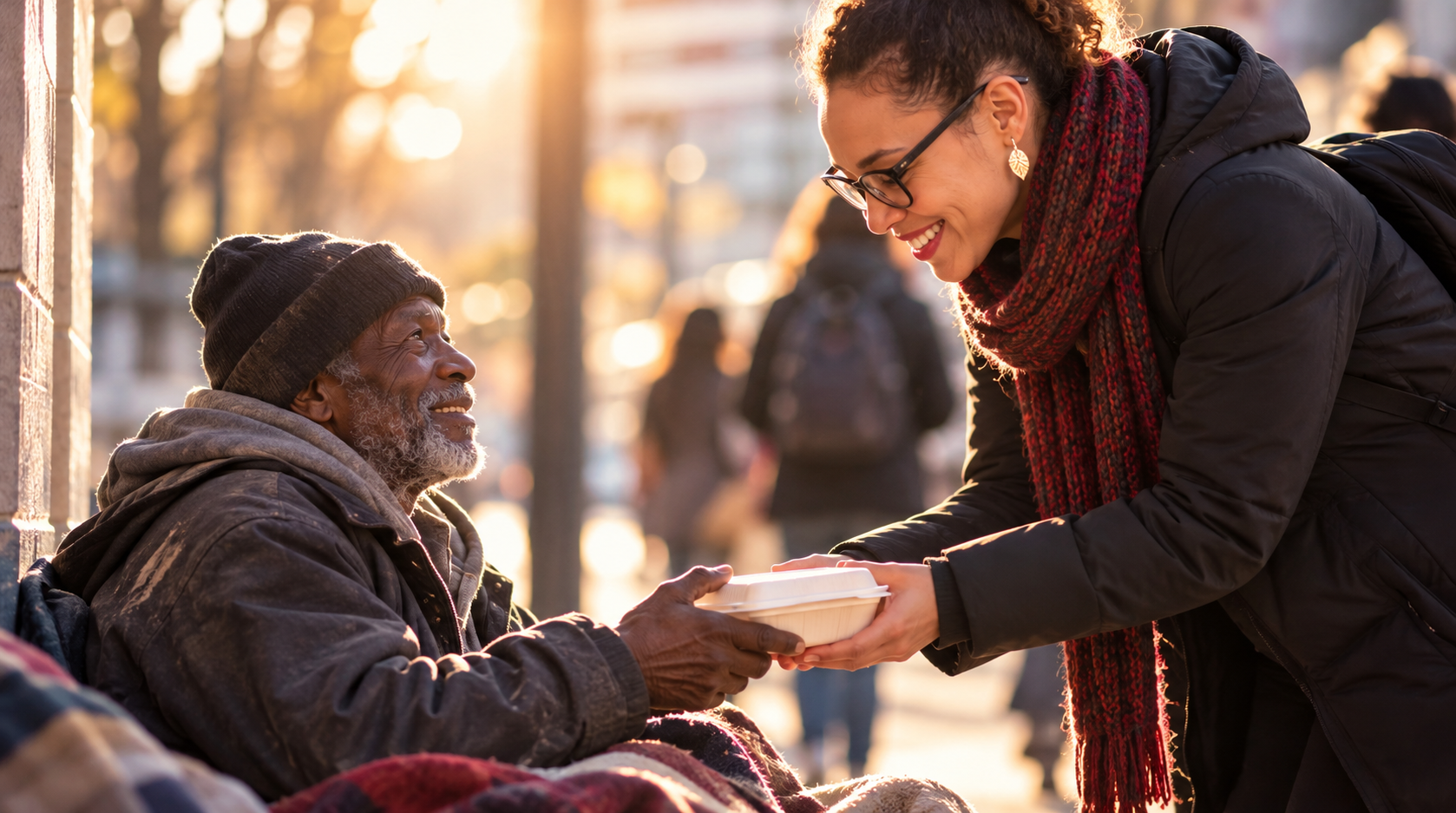
Strangers helping strangers.
Families making room at the table.
Both are happening at the same time.
And I am honestly baffled by why hate exists at all.
I am also a mother and a grandmother.
My beautiful babies are growing up in a world that looks different, often, than the one I grew up in, and I think about that every time I watch them play.
I want them to see a world that has room for them, and I want them to see the people who love them choosing love, out loud, in ordinary ways.
That is part of why I am writing this.
What I Think Is Underneath Hate
I am not a philosopher, but I am an advanced practice nurse and a holistic practitioner, and I have sat with a lot of people in a lot of pain.
What I have come to believe is that fear is usually underneath hate.
Insecurity, too.
The person who is certain of who they are and safe in their own skin rarely needs to tear someone else down to feel tall.
This is my observation from the rooms I have sat in, not a scientific claim, but I have seen it often enough that I no longer believe hate is the opposite of love.
I believe it is love's wounded cousin, fear wearing a loud costume.
That is not an excuse for harm.
It is a reason I try to keep my heart open anyway.
Hate that is met with more hate just grows.
Why the Bleak Looks So Loud
When things look bleak, I try to remember how many beautiful moments are happening in real time that I will never see.
A nurse stays an hour past her shift to hold a hand.
A man pays for a stranger's groceries.
A teenager helps a neighbor carry her bags and thinks nothing of it.
Someone sits in a hospital parking lot and finally breathes because a friend called.
None of it makes the news.
There is actually some science behind why I miss these moments.
In a study published in PNAS, researchers Stuart Soroka, Patrick Fournier, and Lilach Nir had 1,156 people in 17 countries watch BBC World News stories that had been rated as positive, negative, or neutral, while their bodies were monitored.
Across countries, negative stories produced a stronger physical reaction, including a greater change in skin conductance, than positive or neutral ones.
People varied a great deal, and many did not react that way at all.
But on average our nervous systems seem tuned to notice what is going wrong.
That doesn't mean the bad things aren't real.
It means the picture we are handed is skewed toward alarm, and the quiet goodness is simply harder to see.
Knowing that has helped me hold the world more gently.
"Be the Change"
You have probably seen the line:
"Be the change you wish to see in the world."
It is often credited to Gandhi.
It turns out the credit is shaky.
Researchers who trace quotations, including the Quote Investigator, could not find those words in Gandhi's writings.
The earliest close match they found is from 1974, in a chapter called "The Love Project" by educator Arleen Lorrance, who wrote "be the change you want to see happen."
Gandhi did write something related in 1913, that if we could change ourselves, the tendencies in the world would also change.
The Yale Book of Quotations notes that his family believes he said something like it often.
I find it kind of lovely that a line about love and change seems to have come from a project literally called The Love Project.
Wherever it came from, the idea is sound.
And it is also the thing I most often fail at.
Catching Myself
Here is my confession.
I have to catch myself.
It is so easy to look at the world and list everything it is not:
Not kind enough.
Not fair enough.
Not safe enough.
Not listening.
I can do that for an hour.
And nothing in the world changes, and I feel worse.
What I am learning is to turn that same energy around.
Instead of looking at what the world is not, I ask:
What can I be in the next ten minutes, in this room, with this person?
And I want to be honest about how I try to do that.
I am not going into the world with a list of calculated acts of kindness, ticking boxes.
I don't think that works for me, and it doesn't feel like love when I do it that way.
What I try to do instead is let love and kindness prompt me.
I ask myself what would be most meaningful for that person, not what looks good, and then I let what I feel guide me.
Sometimes it is a casserole.
Sometimes it is a text.
Sometimes it is simply sitting down, lowering my voice, and listening without trying to fix anything.
Love Is Not a Performance
And it is not a performance.
It is not a project.
There is nothing to post on social media to show how wonderful I am.
If I am doing it so that someone sees it, then I am doing it for me, and the person in front of me can feel the difference.
The kindest things I have ever received were quiet, and nobody knew about them but the two of us.
I would like my kindness to be like that:
Unannounced, uncredited, and over before I am tempted to tell anyone.
What the Research Says About Giving
I am not the first to notice that kindness seems to be good for the giver, too.
A 2018 meta-analysis in the Journal of Experimental Social Psychology, led by Oliver Scott Curry, reviewed 27 experimental studies with 4,045 participants and found that kind acts had a small-to-medium positive effect on the well-being of the person doing them.
The authors noted the evidence base is still limited and called for more research, so I would not oversell it.
An older study points the same way.
In 2003, psychologist Stephanie Brown and colleagues at the University of Michigan followed 423 older couples for five years.
After accounting for age, gender, and physical and emotional health, people who helped others had a markedly lower risk of dying during those five years than people who gave no help, while receiving help was not linked to the same benefit.
This was observational, so it can't prove that helping prolongs life, but it fits what I have seen for decades:
People who stay engaged in caring for others tend to stay more alive inside.
I will add one thought, because I have written before about the art of receiving.
I don't think giving and receiving are rivals.
A healthy life has room for both, and I have been well served by learning to do the second.
But it is worth knowing that our own healing is bound up with how we show up for others.
Does Love Always Win?
I feel like hope is what this moment calls for.
So let me ask the question out loud:
Does love always win?
In the movies it does.
Well, maybe not in the zombie movies, but that is what I would like to believe.
I will be honest that real life doesn't always roll credits on a happy ending.
Love doesn't prevent loss, and it doesn't undo what was done to us.
But I have watched what happens to people who choose it anyway, again and again, and I have never once seen them regret it.
I think love "wins" in the way a lamp wins against a dark room.
It doesn't erase the room. It changes what we can see and who we can find in it.
Love Begins With Me, With You, With Us
Love begins with me.
Love begins with you.
It begins with us.
Being the very things that make us different and still making conscious choices to choose each other.
I don't mean that our differences disappear.
I mean that we look at the person across from us, whose story, skin, faith, or politics may look nothing like ours, and we decide, on purpose, to treat them as someone who belongs.
From a spiritual standpoint, I believe we are all here to grow and learn and navigate these spaces together.
Every difficult person, every hard conversation, every messy relationship is part of that classroom.
I don't say that to excuse harm.
I say it because it gives the difficulty a purpose.
And a purpose is a kind of hope.
Why Some of Us Turned Away From Love
I also have to say this with compassion.
Not all of us were raised in places where love was free.
Some of us learned that love came with conditions, or with a price, or with silence.
Some of us met loss, grief, or betrayal that changed the course of our lives and taught us to turn away from love in order to survive.
I know that road.
Turning away from love was not a character flaw for many of us.
It was a protection, and it made sense at the time.
That is why I will never judge someone for being guarded.
I only hope that they, and I, can be met by enough safe, steady people that the guard can slowly come down, in our own time.
We Tend to Get What We Are Looking For
Something I believe deeply is that we tend to get what we are looking for.
If I walk into the day scanning for what is wrong, I will find plenty of it, and it will feel true.
If I walk in looking for kindness, I will find that too, because it is there, and because looking changes what I notice.
I want to be careful here, because I have spent a career making sure survivors know that what happened to them was never their fault.
That belief is about where we put our attention, not about blaming anyone for the harm they have endured.
No one asks to be hurt.
What we can choose, over time and with support, is what we practice looking for afterward.
A Caution: Love Must Also Have Courage
Being the change does not mean ignoring injustice.
And it does not mean pasting a smile over real pain.
Some things need to be named, challenged, and changed.
And love sometimes looks like speaking up.
Like telling the truth about a cover-up.
Or standing beside a survivor.
Kindness without courage is only politeness. I want both.
It also doesn't mean one person can fix everything.
We can't.
But we can be a safe place for the one in front of us.
And that is where nearly all change I have witnessed actually began.
One Last Thing: Let Love Begin With Us
So here is my invitation, for myself as much as for you.
The next time you catch yourself looking at the world and listing everything it is not, pause.
Breathe.
Then ask:
What could I be, right now, for one person?
Not a performance.
Not a project.
Nothing to post.
Nothing to prove.
Just whatever love is already prompting you to do, done quietly.
The world does need love now, more than ever.
It always has.
And it has to start with someone.
And the someone might as well be us.
For my grandbabies, and for yours, I would like to be able to say that when the world looked torn apart, we were busy being the ones who helped put it back together.
A Few Questions to Sit With
- What do you find yourself listing about the world that is "not enough"? What would change if you turned that energy toward one person?
- When was the last time you saw an act of kindness that never made the news?
- Where in your life has fear been wearing the costume of anger or hate, in you or in someone else?
- What would it look like to let kindness prompt you instead of planning it?
- Who needs a small, steady act of love from you this week?
--Dr. Rachel